NCL’s Programs






About Us
Fraud.org is a project of
The National Consumers League.
info@nclnet.org
(202) 835-3323
1701 K St NW
Suite 1200,
Washington, DC 20006
© Copyright 2026. All rights reserved.
Each year, the National Consumers League analyzes the thousands of complaints received at Fraud.org from consumers and releases it to the public, in order to track trends in scams and to use as an educational tool for fraud prevention.
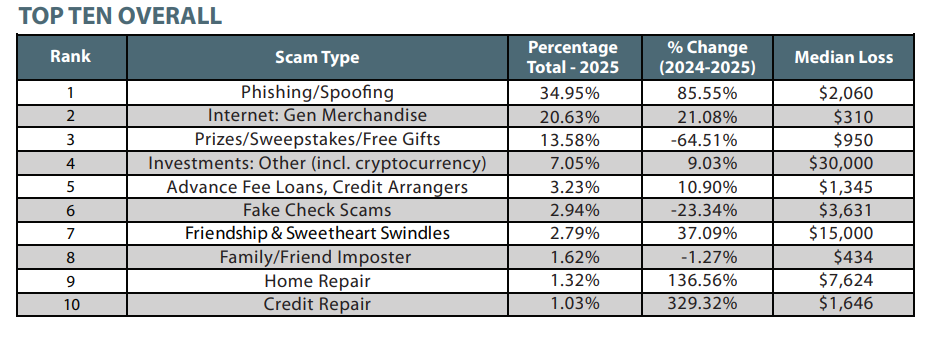
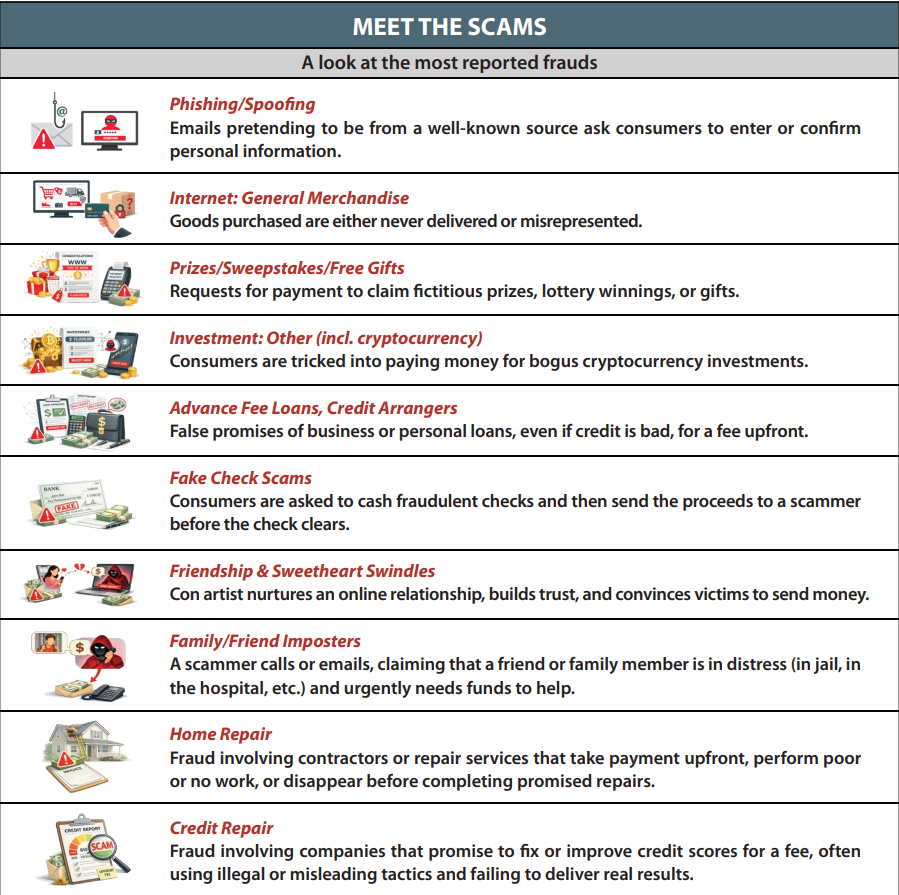
Phishing and spoofing scams once again topped Fraud.org’s annual list in 2025—and the numbers are alarming. This report analyzes 1,376 complaints submitted by scam victims across the United States. As a share of all complaints, phishing and spoofing reports surged 85.6% year over year—nearly doubling compared to 2024. Median losses more than doubled as well, rising from $1,000 to $2,060.
Investment scams—especially those involving cryptocurrency—remained the most financially devastating for victims. The median reported loss from investment scams was $30,000, far exceeding any other category. One likely driver behind the surge in phishing is the growing use of artificial intelligence by scammers. AI tools can generate more convincing emails, texts, and cloned voices, making fraudulent messages harder for consumers to detect and easier for criminals to scale.
In contrast, fake prize and sweepstakes scams declined sharply. As a share of complaints, these scams fell 64.5% year over year. Median losses also dipped modestly, from $1,000 in 2024 to $950 in 2025. Despite these shifts, the three most-reported scams in 2025 remained unchanged from 2024: phishing and spoofing, internet merchandise scams, and fake prizes/sweepstakes
When criminals fi nd a scam that works, they tend to stick with it. That was the case in 2024, when complaints involving fake sweepstakes and bogus gift offers were again the top scam category, making up over a third of all fraud reports (38.27%). Criminals running sweepstakes scams overwhelmingly relied on the telephone to reach potential victims, with 87% of reports indicating that a phone call was how the scam began. Phishing/spoo fing scams (18.83% of reports) and Internet merchandise scams (17.04% of reports) rounded out the top three fraud categories for the second consecutive year.
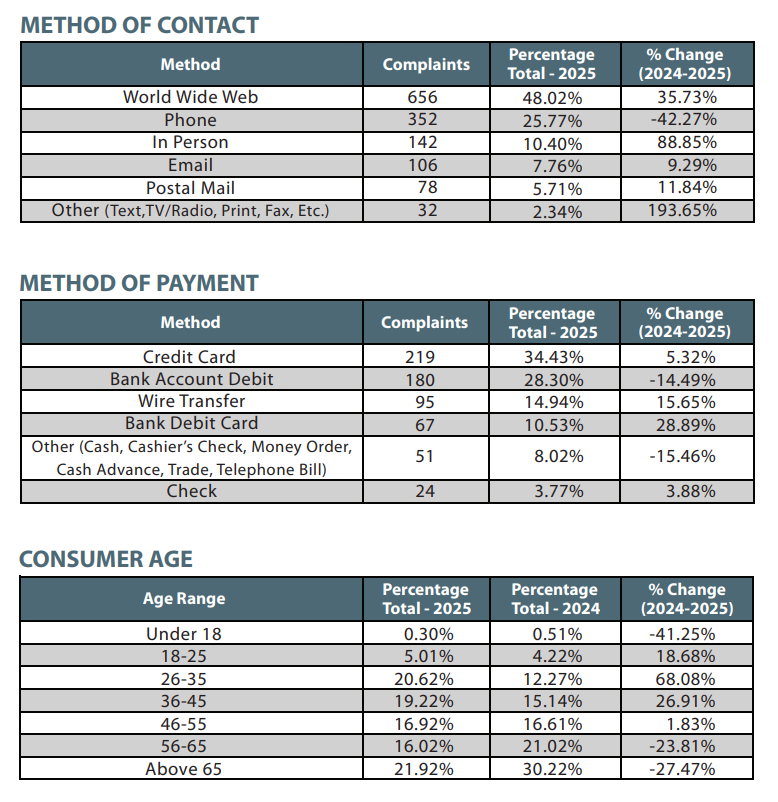
Older consumers (age 56 and above) continued to account for more than a third (37.94%) of Fraud.org complaints in 2025. However, younger adults are filing complaints at a faster rate. Millennials (approximately ages 26–45) represented 39.8% of complaints but were the fastest-growing age cohort. Complaints from consumers aged 26–35 rose 68.1% year over year, while those aged 36–45 increased 26.9%. The data suggest that while older consumers remain heavily impacted, scammers are broadening their reach—and younger adults are increasingly in the crosshairs
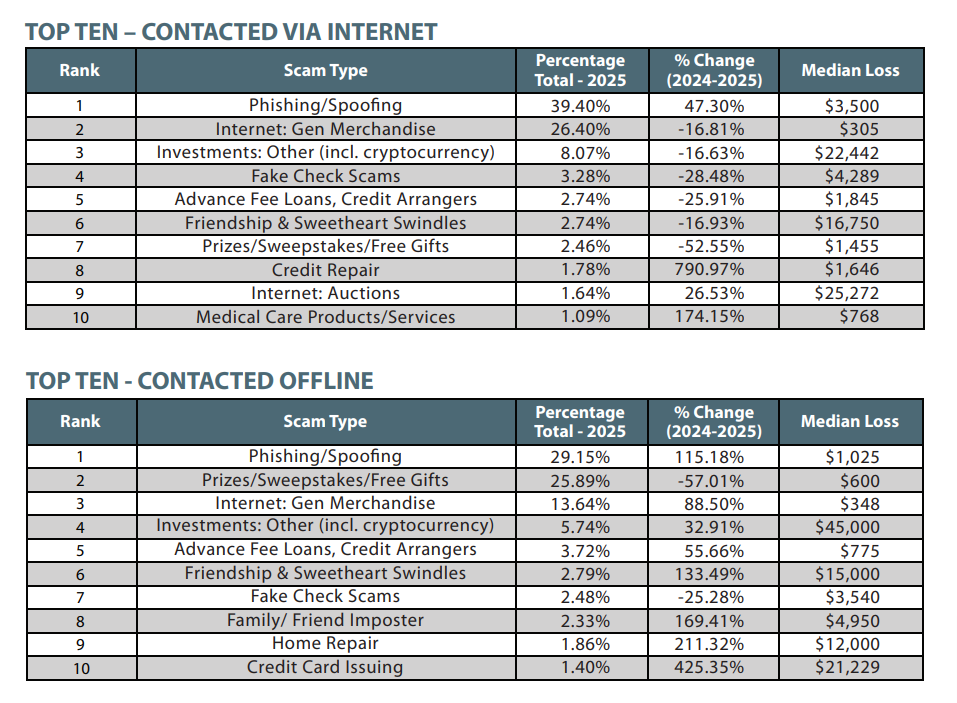
The National Consumers League’s Top Ten Scams report analyzes 1,376 complaints submitted to Fraud.org in 2025. These complaints are self-reported and do not constitute a nationally representative sample of fraud victims. NCL shares complaint data with a network of law enforcement and consumer protection partners, who combine it with other data sources to identify fraud trends and support enforcement actions.
The bottom line
Regardless of the type of scam, many instances of fraud can be avoided by remembering the old rule of thumb: If something seems too good to be true—it probably is.
If you ever do have questions about a potential fraud or think you might be a victim of a scam, report it immediately via Fraud.org’s secure online complaint form. Embarrassment or fear of friends and relatives finding out about the crime causes many victims of fraud to remain silent. Only by speaking out can we give law enforcement the tools they need to bring these criminals to justice.
About this report
Fraud.org’s Top Ten Scams report is compiled annually from complaints received directly from consumers. We do not attempt to verify the authenticity of these complaints, nor do they represent a scientific sample. To get more information on these scams or report suspected fraud, please visit Fraud.org.
Fraud.org is supported by the generous donations by members of our community. You can make a secure, tax-deductible gift here.