NCL’s Programs





About Us
Fraud.org is a project of
The National Consumers League.
info@nclnet.org
(202) 835-3323
1701 K St NW
Suite 1200,
Washington, DC 20006
© Copyright 2026. All rights reserved.
Each year, the National Consumers League analyzes the thousands of complaints received at Fraud.org from consumers and releases it to the public, in order to track trends in scams and to use as an educational tool for fraud prevention.
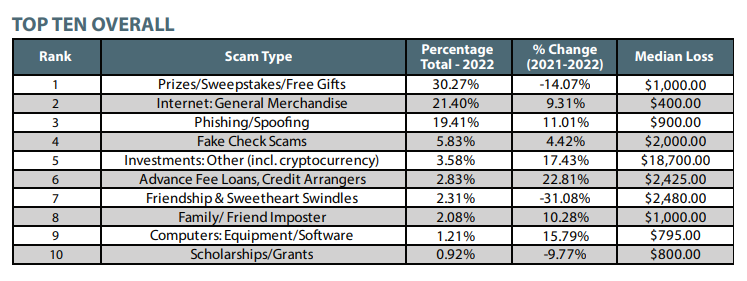
In 2022, the median loss for frauds reported in the investment category was $18,700. This is over 10 times greater than the 2021 median loss reported in this category ($1,750). Notably, the investment category includes cryptocurrency scams. These types of fraud center around stealing money under the guise of investing the funds into cryptocurrency on behalf of the victim. Although cryptocurrency values largely crashed in the summer of 2022, the earlier run-up in value of Bitcoin and other cryptocurrencies may have been a selling point for fraudsters.
Fraudulent prizes and sweepstakes remained the most reported type of scam. Despite making up a smaller share of overall reports compared to complaints in 2021, this category is still seven points higher than its 23% prevalence in 2020. Making up 30% of all reports received by Fraud.org in 2022, this type of scam still has a broad reach, particularly when victims were contacted over the phone. Among phone-based scams, reports of bogus prizes and sweepstakes represented 50% of complaints.
Reports involving false promises of business or personal loans represented the fastest growing category of complaints in 2022. With a year-over-year increase of 23%, this trend may reflect the economic difficulties many consumers are facing nationwide. Scammers are likely preying on record inflation combined with lingering effects from the pandemic, targeting individuals seeking cash quickly to make ends meet.
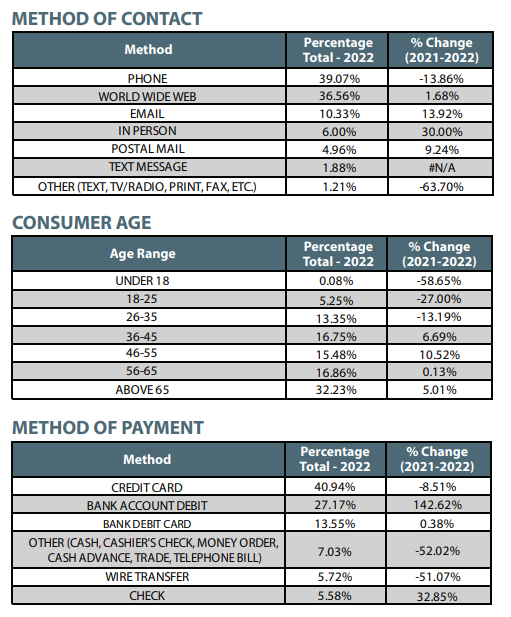
In 2021, 11% of consumers who reported losing money to a scam listed bank account debit as the method of transfer. In 2022, that number jumped to 27.17%, making it fraudsters’ second most popular form of receiving money (with credit card at number one and debit card at number three). Bank account debits include charges sent via peer-to-peer payment apps, such as Zelle, Venmo, and Cash App. This trend coincides with the recent increase of fraud on these apps, with scammers taking advantage of the nearly instant transfer of money that the payment apps provide.
With 31% fewer reports compared to last year, romance scams may be losing prevalence. The popularity of documentaries like “The Tinder Swindler” and “Inventing Anna,” which focused on romance scams, likely raised consumers’ awareness of and resistance to this fraud in 2022.
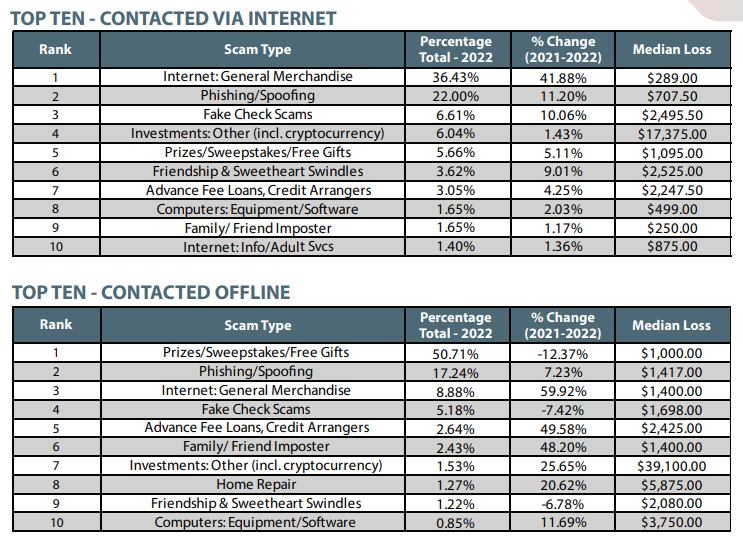
The National Consumers League Top Ten Scams report analyzes 3,503 complaints submitted by consumers to NCL’s Fraud.org campaign in 2022. This data is self-reported and should not be considered a nationally representative sample of fraud victims. NCL shares complaint data with a network of law enforcement and consumer protection agency partners who combine it with other data sets to identify trends in fraud and build cases.
The bottom line
Regardless of the type of scam, many instances of fraud can be avoided by remembering the old rule of thumb: If something seems too good to be true—it probably is.
If you ever do have questions about a potential fraud or think you might be a victim of a scam, report it immediately via Fraud.org’s secure online complaint form. Embarrassment or fear of friends and relatives finding out about the crime causes many victims of fraud to remain silent. Only by speaking out can we give law enforcement the tools they need to bring these criminals to justice.
About this report
Fraud.org’s Top Ten Scams report is compiled annually from complaints received directly from consumers. We do not attempt to verify the authenticity of these complaints, nor do they represent a scientific sample. To get more information on these scams or report suspected fraud, please visit Fraud.org.
Fraud.org is supported by the generous donations by members of our community. You can make a secure, tax-deductible gift here.